Every two years, junior cricket gives us a preview of the next decade, and the ICC U19 Men's World Cup 2026 in Zimbabwe and Namibia was the loudest preview in years. Sixteen teams, 41 matches, 23 hundreds, and a final in Harare where a teenager hit 175 off 80 balls. India lifted the trophy for a record sixth time, beating England by 100 runs on 6 February 2026, and they did it unbeaten.
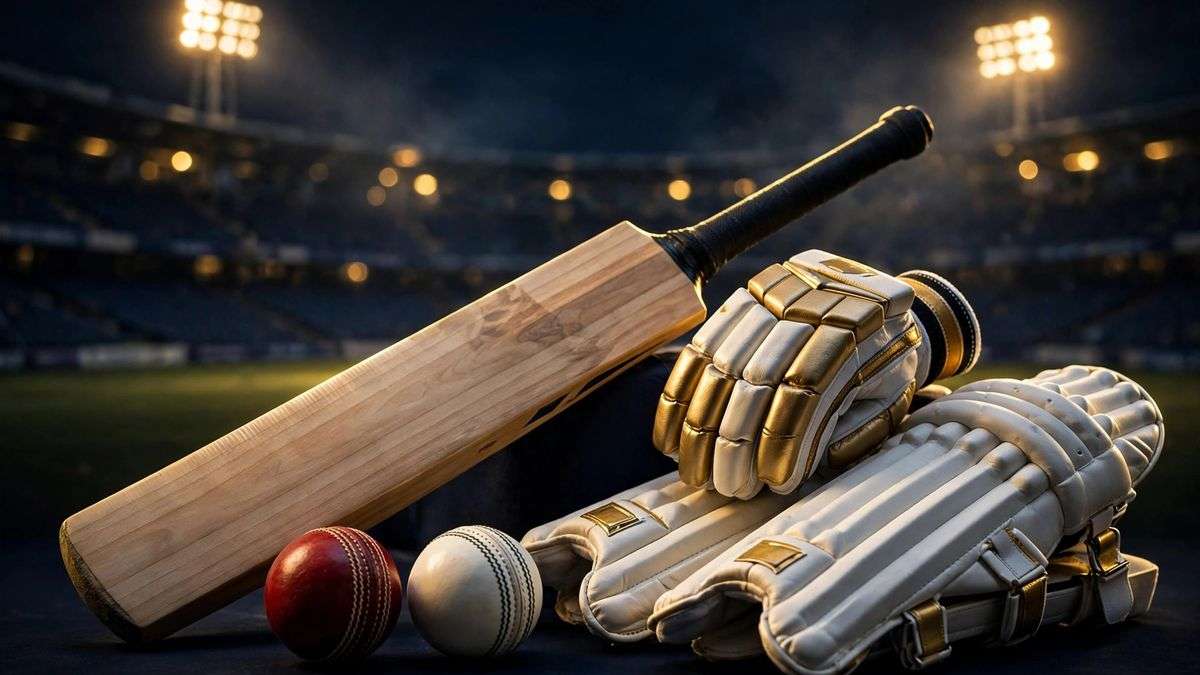
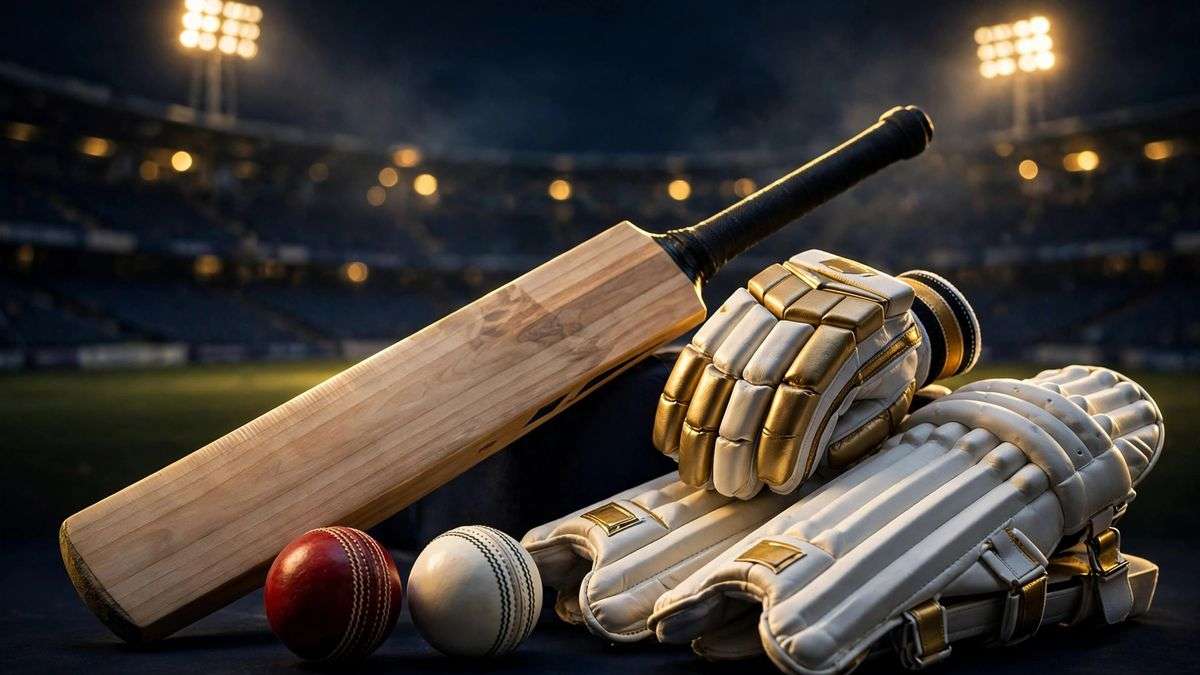
If you coach juniors, play junior cricket, or kit out a young player at home, this tournament is the one to study. The standard of power-hitting has jumped again, and the equipment questions parents ask us in Round Rock — which bat weight, which gloves, how much protection — were answered on the field every day for three weeks.
The tournament at a glance
Series summary — ICC U19 Men's World Cup 2026
- Dates / hosts: 15 January – 6 February 2026, Zimbabwe and Namibia
- Format: Four groups, Super Six stage, semi-finals, final — 41 matches, 50 overs a side
- Champions: India (6th title) — beat England by 100 runs in the final
- Player of the tournament: Vaibhav Sooryavanshi (India) — 439 runs
- Most runs: Ben Mayes (England) — 444
- Most wickets: Manny Lumsden (England) — 16
Australia arrived as defending champions. They left in the semi-finals, beaten by an England side that played the most complete cricket of the middle fortnight. India, captained by Ayush Mhatre, simply never had a bad day.
The story was the batting
Twenty-three centuries in one edition is the second-highest count in the tournament's history, behind only the 25 in 2018. The individual scores kept getting sillier. Sri Lanka's Viran Chamuditha made 192 against Japan, the highest score of the tournament. England's Ben Mayes hit 191 against Scotland and finished top of the run charts with 444. Afghanistan's Faisal Shinozada scored 435 runs with two hundreds, including 163 against Ireland in a Super Six game that was effectively a quarter-final, then 110 in the semi-final against India.
And then there was Vaibhav Sooryavanshi. The Indian opener cleared the rope 30 times in seven matches, a tournament record for sixes, and saved his biggest innings for the final: 175 off 80 balls, a hundred off 55 deliveries, 150 of his runs in boundaries. Read our full final report for that innings ball by ball — it deserves its own post, and it has one.
How the knockouts fell
The Super Six stage sorted the field into four semi-finalists: India, Afghanistan, England and Australia. England beat Australia by 27 runs in the first semi-final on 3 February, a match with a hundred on each side — Thomas Rew's 110 for England cancelling out Australian captain Oliver Peake's 100. A day later India chased down Afghanistan's total with seven wickets in hand, Shinozada's 110 not quite enough against the deepest batting line-up in the field.
The final, at Harare Sports Club on 6 February, is covered in depth in our final post. The short version: India 411 for 9, England 311 all out, and a margin of 100 runs that is the largest ever recorded in a U19 World Cup final.
Names to file away
U19 World Cups are a scouting document. From this edition, write these down:
- Vaibhav Sooryavanshi (India) — 439 runs at a strike rate of 169.50, Player of the Tournament, and the first player to win Player of the Final and Player of the Tournament at the same U19 World Cup.
- Ben Mayes (England) — 444 runs, the fourth-highest tally in a single edition. Consistency like that at 18 is rare.
- Faisal Shinozada (Afghanistan) — 435 runs at an average of 87. Afghanistan keep producing batters who play spin like they grew up on turners, because they did.
- Manny Lumsden (England) — 16 wickets, the tournament's leading bowler, and the man who finally ended Sooryavanshi's final innings.
- Thomas Rew (England) — 330 runs plus 12 catches and 2 stumpings as wicketkeeper-captain material behind the stumps.
The numbers that frame the tournament
The ICC's own review pack puts hard edges on the impression the tournament left. Batters struck 317 sixes across the 41 matches. The final alone produced 722 runs, with India's 411/9 the highest total a U19 World Cup final has seen. Ben Mayes' 444 runs are the fourth-highest tally in a single edition, behind only Dewald Brevis (506 in 2022), Shikhar Dhawan (505 in 2004) and Brett Williams (471 in 1988) — good company for an 18-year-old to keep. Manny Lumsden's 16 wickets sit in similar territory for England: only Reece Topley (19 in 2012) and Tim Bresnan (17 in 2004) have taken more for England in one edition.
Pakistan's Hamza Zahoor took 13 catches, the most by a wicketkeeper in the tournament — a detail that matters, because U19 keeping standards decide close Super Six games more often than the highlights admit.
Two hosts, one stage
Zimbabwe and Namibia shared the tournament, with matches spread across Harare, Bulawayo and Windhoek. For the hosts, the cricket was harder than the hospitality: Zimbabwe's Super Six meeting with India in Bulawayo ended in a 204-run defeat, bowled out for 148. But hosting matters for the next generation watching from the boundary — junior players in Harare saw a World Cup final at their home ground, and that tends to show up in participation numbers for years afterwards.
Namibia's grounds hosted Super Six fixtures as well, and the tournament ran smoothly across two countries, three main venues and 23 days. For a 16-team junior event, that is no small organisational feat, and it gave young players experience of travel, changing conditions and back-to-back fixtures — the unglamorous parts of professional cricket that academies try to simulate and rarely can.
What junior cricket at this level asks of equipment
Watch the replays and one thing stands out: these are not small boys with big bats any more. Strength and conditioning has changed junior cricket, and innings like Sooryavanshi's 175 — built on a full, fast bat swing repeated for 80 balls — need a bat that is picked up cleanly and gloves that do not slip when hands sweat through a long innings in Harare heat.
Three practical takeaways we give junior players and parents:
1. Bat weight beats bat size. A bat a young player can swing at full speed for 40 overs is worth more than the biggest profile they can barely lift. If the toe drags on the pick-up, it is too heavy. 2. Gloves are a safety item, not an accessory. Facing 130 kph-plus pace at U19 level, finger protection and a firm grip matter on every ball. 3. Helmets must fit the head they protect. A loose helmet moves on impact. Check the fit every season — junior heads grow faster than kit bags get replaced.
The tournament in numbers
Most runs — ICC U19 World Cup 2026
| Player | Team | Runs | Average | Strike rate |
|---|---|---|---|---|
| Ben Mayes | England | 444 | 74.00 | 112.41 |
| Vaibhav Sooryavanshi | India | 439 | 62.71 | 169.50 |
| Faisal Shinozada | Afghanistan | 435 | 87.00 | 107.14 |
| Thomas Rew | England | 330 | 66.00 | 105.10 |
| Viran Chamuditha | Sri Lanka | 310 | 62.00 | 122.05 |

Most runs — ICC U19 World Cup 2026 — Chart: Moor Gears
Most wickets — ICC U19 World Cup 2026
| Player | Team | Wickets | Average | Economy |
|---|---|---|---|---|
| Manny Lumsden | England | 16 | 16.06 | 4.90 |
| Nooristani Omarzai | Afghanistan | 14 | 14.50 | 4.23 |
| Ali Raza | Pakistan | 13 | 13.92 | 4.02 |
| Abdul Subhan | Pakistan | 12 | 9.83 | 2.93 |
| Al Fahad | Bangladesh | 12 | 14.75 | 4.66 |

Most wickets — ICC U19 World Cup 2026 — Chart: Moor Gears
Read the two tables together and the tournament's shape jumps out. The top of the batting chart is a shootout — Mayes, Sooryavanshi and Shinozada separated by nine runs — while the bowling chart belongs to control: four of the five leaders went at under five an over in a tournament that produced 317 sixes. Abdul Subhan's line is the quiet marvel of the event: 12 wickets at 9.83 apiece, economy 2.93, in a month when batters were swinging like it was a T20.
What went right
- India's depth chart is absurd. Their top order produced the final's headline, but the squad kept finding a different hero: Aaron George's 115 in the semi-final chase, Vihaan Malhotra's 4 for 14 with the ball against Bangladesh in the group stage, contributions stacked one to seven. The longer view is scarier for everyone else — since 2016, India have won 35 of 38 U19 World Cup matches, and all three defeats came in finals.
- The batting standard jumped a level. Twenty-three hundreds, 317 sixes, a 328-run opening stand from Sri Lanka's Dimantha Mahavithana and Viran Chamuditha — the highest partnership for any wicket in U19 World Cup and Youth ODI history. Junior batting is not catching up with the senior game; on some days it is lapping it.
- Afghanistan belong in the last four conversation now. A semi-final built on Shinozada's 435 runs at 87, with two hundreds, is not a fairy tale any more. It is a production line.
- Two-host staging worked. Forty-one matches across Zimbabwe and Namibia ran without a hitch, and Harare got a final for the ages: 722 runs, the highest aggregate in any Youth ODI.
What went wrong
- The hosts never got out of the group conversation. Zimbabwe's Super Six meeting with India ended in a 204-run defeat, bowled out for 148. Hosting a World Cup is brilliant for participation; getting rolled at home in front of the kids you are trying to inspire is the hard part of the bargain.
- Sri Lanka did the hardest thing and went home anyway. Chamuditha scored 192 and 310 tournament runs, his side produced the record 328 opening stand — and they still missed the semi-finals on net run rate after finishing third in their Super Six group. The format rewards consistency, and one bad afternoon cost them everything.
- The final was decided in 26 overs. A 100-run margin — the biggest in a U19 final — is a tribute to Sooryavanshi, but England's attack had no second plan once he got going. Thomas Rew admitted afterwards they were scratching their heads about where to bowl. Fair enough. So was everyone watching.
Emerging names
The overview above files away the headline five. Add these to the notebook:
- Viran Chamuditha (Sri Lanka) — 310 runs at 62, including the tournament's highest score, 192 against Japan, and that record 328 opening stand. Sri Lanka's next top-order problem is a good one.
- Abdul Subhan (Pakistan) — 12 wickets at an average of 9.83 and an economy of 2.93. In a six-hitting festival, a teenager went at under three an over. Remember the name when Pakistan's senior selectors go looking for control.
- Caleb Falconer (England) — 309 runs for the tournament, then 115 off 67 in the final with his side chasing 412. Losing hundreds in finals are usually forgotten. This one will not be.
- Jason Rowles (South Africa) — 280 runs at 70 with a strike rate of 112, including 125 against Tanzania. South Africa's U19s underdelivered as a team; Rowles did not.
What to watch next
The next U19 World Cup is in 2028, and most of this field will be too old for it — which is exactly the point. The real sequel happens in senior and franchise cricket, and it has already started: in IPL 2026, Sooryavanshi scored 776 runs for Rajasthan Royals at a strike rate of 237.31, hit 72 sixes, won the Orange Cap and was named the league's MVP — the youngest winner of that award. The 175 in Harare was not a one-off. It was a trailer.
Watch, too, for England's response. Mayes, Rew, Falconer and Lumsden are a ready-made core for the Lions pathway, and Afghanistan's question is the most interesting in world cricket: how quickly do Shinozada and Omarzai get senior caps, and what happens to opposition planning meetings when they do?
The coach's eye
Start with India's batting order. The draft of this tournament is not one innings, it is the stack from one to seven: Aaron George made 115 in the semi-final chase, Vihaan Malhotra took 4 for 14 with the ball against Bangladesh in the group stage, and the final still belonged to someone else. A coach reads that as a selection lesson. No batter had to protect his place by playing for himself, because the next man in had already produced in the same tournament.
Then look at the bowling chart. Five of the six bowlers at the top of the wickets list went at under five an over in a tournament with 317 sixes and 23 hundreds. Abdul Subhan went at 2.93. That is not a call to bowl defensively. It is proof that, even when batters swing from ball one, the ball that does not give width or a half-volley still has value. Control was not the opposite of attack here. It was the attack that lasted.
Faisal Shinozada shows the third point: backing up. His 163 against Ireland was effectively a quarter-final. He then made 110 in a semi-final against India. Young players often spend the innings after a big score. He started again.
What most people missed
Pakistan's Hamza Zahoor took 13 catches, the most by a wicketkeeper in the tournament. In a month remembered for sixes, the best glovework still changed games in the Super Six, where one missed chance behind the stumps can cost more than one boundary saves.
Manny Lumsden's 16 wickets also need their frame. For England at this tournament, only Reece Topley, with 19 in 2012, and Tim Bresnan, with 17 in 2004, have taken more in a single edition. Lumsden was not just the leading bowler in a high-scoring month. He put himself third on an England list that spans decades.
And Sri Lanka's exit hides a record. Dimantha Mahavithana and Viran Chamuditha put on 328 for the first wicket, the highest partnership for any wicket in U19 World Cup and Youth ODI history, and Sri Lanka still missed the semi-finals on net run rate. One historic morning did not repair one bad afternoon.
The bit that stays with you
Somewhere in Harare, a junior player watched a World Cup final at his home ground and then went back to training with the same problems the rest of us have: a bat that feels fine for ten balls and heavy by the fortieth, gloves that slip when his hands get hot, a pick-up that drags when he is tired. That is why this final lands for club cricketers. Sooryavanshi made 175 off 80 balls, but the part you can copy is not the sixes. It is the clean swing, repeated. Every junior has stood in a net while a coach says the dull thing again: head still, swing through, do not force it. Then a teenager does it, ball after ball, in a final, against the best attack in the tournament, and the dull thing stops sounding dull. It sounds like the whole game, stripped back to one good habit held under pressure.
Gear corner
Building a junior kit for hard-ball cricket? Start with the pieces this tournament put under pressure:
- Kashmir willow cricket bats — the sensible first hard-ball bat for growing players.
- Batting gloves — protection and grip for long innings.
- Cricket helmets — check the fit before every season.
- Cricket kit bags — because junior kit multiplies faster than you expect.
Sources & credits
- Wikipedia — 2026 Under-19 Men's Cricket World Cup (dates, format, results): https://en.wikipedia.org/wiki/2026_Under-19_Men's_Cricket_World_Cup
- CricketNews — tournament awards, most runs and wickets: https://www.cricketnews.com/en/cricket/news/icc-under-19-world-cup-2026-final-tournament-awards-pott-most-runs-wickets/c579020294d2921f17ef8700
- ICC Event Review Pack (official statistics): https://images.icc-cricket.com/image/upload/prd/ehcbdj16dkazogku2c2d.pdf
- Wisden — team of the tournament and player statistics: https://www.wisden.com/series/icc-under-19-cricket-world-cup-2026/cricket-news/wisdens-mens-u19-world-cup-2026-team-of-the-tournament
- ICC Cricket Schedule — full batting and bowling leaderboards: https://www.icccricketschedule.com/icc-u19-world-cup-2026-players-with-most-runs-most-wickets-and-all-stats/
- ICC — official records round-up of the tournament: https://www.icc-cricket.com/media-releases/records-tumbled-as-future-stars-shone-bright-at-icc-u19-men-s-cricket-world-cup-2026
- ESPNcricinfo — Rajasthan Royals season record (Sooryavanshi's IPL 2026): https://www.cricinfo.com/team/rajasthan-royals-335977
All facts above are match facts (scores, dates, awards) reported from these sources; the writing is our own.
Moor Gears is an independent cricket equipment retailer based in Round Rock, Texas, and is not affiliated with or endorsed by the ICC or any team mentioned.