The ICC Women's T20 World Cup 2026 was the biggest edition yet — 12 teams for the first time, 33 matches across seven English grounds, and a final at Lord's in front of more than 28,000 people, a record crowd for the event. It ended the way so many of these tournaments end: with Australia holding the trophy. On 5 July 2026 they chased down England's 150/4 with 17 balls to spare, won by seven wickets, and completed an unbeaten run to a seventh T20 World Cup title — their 14th women's World Cup across formats.
England, the hosts, also arrived at the final unbeaten. Somebody's perfect record had to go, and the difference on the day was the player who has made a habit of deciding these matches: Beth Mooney.
The tournament at a glance
Series summary — ICC Women's T20 World Cup 2026
- Dates / hosts: 12 June – 5 July 2026, England (10th edition, first with 12 teams)
- Format: Two groups of six, semi-finals, final — 33 matches
- Champions: Australia (7th title) — beat England by 7 wickets in the final
- Player of the tournament: Beth Mooney (Australia) — 238 runs
- Most runs: Danni Wyatt-Hodge (England) — 302, the first 300-run edition by any batter
- Most wickets: Sree Charani (India) — 14
Two unbeaten teams, one final
England's campaign was built on Danni Wyatt-Hodge, who scored 302 runs at a strike rate close to 150, including a century against Sri Lanka in a performance that set a new highest team total in the tournament's history — a mark Australia later equalled. Captain Nat Sciver-Brunt carried the middle order and produced fifties in both knockout matches.
Australia's route was quieter and colder. Sophie Molineux, captaining at a World Cup for the first time, lifted the trophy at the end of a campaign with no defeats and no real scares after the group game against India, where Ellyse Perry pulled them out of trouble at 68/3 chasing 171. Mooney scored half-centuries in both the semi-final (61 not out against West Indies) and the final (64 against England). It was her third fifty in a T20 World Cup final, after 2020 and 2023. Some players collect finals; Mooney collects final innings.
The stories under the headline
Defending champions New Zealand went out in the group stage — the first shock of the tournament and a reminder that the women's game now has real depth below the top two. India finished third in their group and missed the semi-finals despite having the tournament's best bowler: left-arm spinner Sree Charani took 14 wickets in five innings at an average of 8.35, an Indian record for a single T20 World Cup. South Africa reached the semi-finals and their veteran quick Shabnim Ismail became the first bowler to 50 Women's T20 World Cup wickets, finishing with 51. West Indies, the fourth semi-finalist, were swept aside by Australia at The Oval.
England's failure to win was also a first: they had won all four previous women's World Cups played on home soil. Australia, meanwhile, kept their own streak — they have now won all seven World Cup finals, ODI and T20, contested against England.
The group stage in brief
The expanded format split 12 teams into two groups of six, and both groups produced a perfect winner. Australia won all five of their Group 1 matches; England won all five in Group 2. Behind them, the fight for second places was the real tournament. South Africa's win over India at Old Trafford — Marizanne Kapp's unbeaten 81 off 45 chasing 159 — decided Group 1's second spot and sent India home in third, despite Sree Charani's 14 wickets and a net run rate better than the side that went through. West Indies took Group 2's second place even after losing to Ireland, whose six-wicket win was the result that best explained the new depth of the field.
The full batched account — including both semi-finals at The Oval, Gardner's all-round game against West Indies and Sciver-Brunt's 75 in England's 40-run win over South Africa — is in our group stage roundup. The final report covers Lord's in detail.
Depth below the top two
Three weeks of cricket made one structural point clearly. The gap is no longer between Australia, England and everyone else; it is between Australia and a chasing pack that now includes India, South Africa and a West Indies side that made a semi-final. Ireland beating West Indies, India's spinner topping the wicket charts, Shabnim Ismail reaching 50 career wickets at this tournament — these are not footnotes. They are the shape of the next cycle, and they are why the ICC's move to 12 teams landed: the extra places went to sides that used them.
A note on the hosts
England also staged the first edition of this tournament, back in 2009, and won it. Seventeen years on they hosted a 12-team version, filled Lord's for the final, and produced the event's top run-scorer — and still went home as runners-up. That contrast is the cleanest measure of how far the women's game has travelled: a strong host nation, playing well, in front of a record crowd, was not enough, because the standard everywhere else has risen to meet it. The next edition will start from a higher base than this one did, and this one started high.
What this tournament says about the women's game
Crowds first: a 28,000-plus Lord's final for a T20 tournament is a number that would have been unthinkable a decade ago. Then the cricket: 302 runs from Wyatt-Hodge, a 14-wicket tournament from a young Indian spinner, and a champion side whose match-winner is 32 and playing her best cricket in finals. The standard of fielding across all 12 teams — Ireland beating West Indies in the group stage was built on it — keeps rising fastest of all.
The tournament in numbers
Most runs — ICC Women's T20 World Cup 2026
| Player | Team | Runs | Strike rate |
|---|---|---|---|
| Danni Wyatt-Hodge | England | 302 | 149.50 |
| Beth Mooney | Australia | 238 | 142.51 |
| Nat Sciver-Brunt | England | 227 | 142.76 |
| Tazmin Brits | South Africa | 225 | 129.31 |
| Darcey Carter | Scotland | 208 | 111.82 |

Most runs — ICC Women's T20 World Cup 2026 — Chart: Moor Gears
Most wickets — ICC Women's T20 World Cup 2026
| Player | Team | Wickets | Economy | Best figures |
|---|---|---|---|---|
| Sree Charani | India | 14 | 5.85 | 4/19 |
| Sophie Molineux | Australia | 11 | 6.75 | 2/6 |
| Fatima Sana | Pakistan | 11 | 6.95 | 3/12 |
| Sophie Ecclestone | England | 10 | 6.00 | 3/22 |
| Hayley Matthews | West Indies | 10 | 6.30 | 3/15 |

Most wickets — ICC Women's T20 World Cup 2026 — Chart: Moor Gears
The shape of the event is in these two tables. The runs chart is led by the hosts' opener and decided by Australia's keeper; the wickets chart is topped by an Indian spinner whose team did not reach the semi-finals, and includes the winning captain in second place. Molineux took 11 wickets while captaining a side through an unbeaten tournament — leadership and output in the same pair of hands.
What went right
- The expansion worked. Twelve teams was the gamble of this edition, and the new places earned their keep: Ireland beat West Indies, Scotland's Darcey Carter scored 208 runs with two fifties, and the Netherlands and Scotland both had moments that were not patronising ones. The field is deeper, and it shows in the tables.
- Australia's transition did not cost them a game. A first-time World Cup captain, an unbeaten run, a record eighth final, and the final won with 17 balls to spare. Dominant teams are supposed to wobble when the leadership changes. This one changed captain and got colder.
- The occasion matched the cricket. More than 28,000 at Lord's for the final — a record for this event — and a tournament whose top run-scorer was the home side's opener. England staged a World Cup that felt like a World Cup.
What went wrong
- The holders never got going. New Zealand opened with two straight defeats — to West Indies and Sri Lanka — and a title defence that starts like that rarely recovers. They went out in the group stage, the earliest exit of a defending champion this tournament has had.
- India's exit made no statistical sense, which is why it hurt. The tournament's best bowler (Charani, 14 wickets at 8.35 apiece), a net run rate of +1.718 that was better than the team that went through ahead of them (South Africa, +0.633) — and third place in the group, because one match at Old Trafford, Kapp's 81 not out, went the other way. One game. That was the whole margin.
- England's final was 15 runs light. For all their group-stage power, 150/4 at Lord's — built on a rescue partnership after both openers fell for single figures — was never quite enough against that chase. The campaign was excellent; the last afternoon was merely good.
Emerging names
- Sree Charani (India) — 14 wickets in five innings at an average of 8.35 and an economy of 5.85. The tournament's outstanding bowler played for a team that went home early. That will not happen often if she keeps this up.
- Darcey Carter (Scotland) — 208 runs and two fifties for a side playing its first 12-team edition. Scotland's presence in the top five of the runs chart is the expansion argument, won.
- Freya Kemp (England) — 44 not out off 28 balls in a World Cup final, dragging England from 70/4 to 150. Young all-rounders who produce in finals get long careers.
- Fatima Sana (Pakistan) — 11 wickets at under seven an over for a side that won once all tournament. Pakistan's next cycle starts with her.
What to watch next
The next Women's T20 World Cup is in Pakistan, from 7 September to 1 October 2028 — a 12-team edition, with England among the automatic qualifiers. Two threads to follow into it. First, England's transition: Heather Knight played her last T20I in this final, and the side that nearly won at home now rebuilds around Sciver-Brunt, Wyatt-Hodge and Kemp. Second, Australia's horizon: Ellyse Perry became the first cricketer, male or female, to win nine World Cups across formats at Lord's. Somebody has to beat this team eventually. Pakistan 2028 is where the queue forms.
The coach's eye
One over can close a semi-final. At The Oval, Ashleigh Gardner removed Stafanie Taylor and Jahzara Claxton in the same over, finished with 2/13, and West Indies stopped at 125/7. Coaches talk about bowling in partnerships, but knockout games often turn on a single over where a bowler attacks two set plans at once — after that over, West Indies were rebuilding and chasing the game in the same breath, and Australia's batters never had to take a risk in reply.
The captain bowled like a frontline spinner, not a part-timer. Sophie Molineux took 11 wickets at an economy of 6.75 while captaining a World Cup for the first time. That matters tactically: a captain who bowls her own overs in the middle of an innings sets fields she has to defend herself, and reads a pitch through her own spell rather than through reports. Australia's control in the middle overs started there.
Mooney paced two chases two ways. In the semi-final she finished 61 not out; in the final she made 64 and fell near the end. Same player, same week, two different jobs — close the game out in one, set the tempo in the other. That is the skill coaches prize most in a senior batter: not a favourite innings, but the right innings for the scoreboard in front of her.
What most people missed
- The tournament's best bowler never played a semi-final. Sree Charani took 14 wickets at an average of 8.35 and an economy of 5.85 — numbers that usually headline a final — for an India side that went out in the group stage. The wickets chart and the semi-final line-up tell two different stories about this tournament, and hers is the one that got away.
- A 50-wicket milestone landed inside a defeat. Shabnim Ismail became the first bowler to 50 Women's T20 World Cup wickets during the semi-final South Africa lost by 40 runs. Landmarks usually arrive in wins, with a pause and a graphic. Hers arrived mid-match, in a losing cause, and most viewers will have missed it entirely.
- The winning captain sits joint-second on the wickets chart. Molineux's 11 wickets, level with Pakistan's Fatima Sana, hide in plain sight behind Charani's 14. An unbeaten title run captained by one of the tournament's joint-second-highest wicket-takers is a rare combination, and it passed with barely a mention.
The bit that stays with you
Ellyse Perry's tournament bookends are the part that lingers. In the group stage, with Australia 68/3 chasing 171 against India, she pulled a slipping game back. In the final at Lord's, she was at the crease when the winning runs came. Between those two moments she became the first cricketer, male or female, to win nine World Cups. Anyone who plays club cricket knows a version of this player — not always the loudest in the side, not always the one on the poster, but the one who is somehow still there, years later, when the game needs somebody calm. Careers at the top are supposed to narrow. Hers kept widening, across formats and across generations of teammates, until the record books had to invent a category for her. Nine World Cups is a statistic. Being needed in the first week and the last hour of the same tournament, at this stage of a career, is the story underneath it.
Gear corner
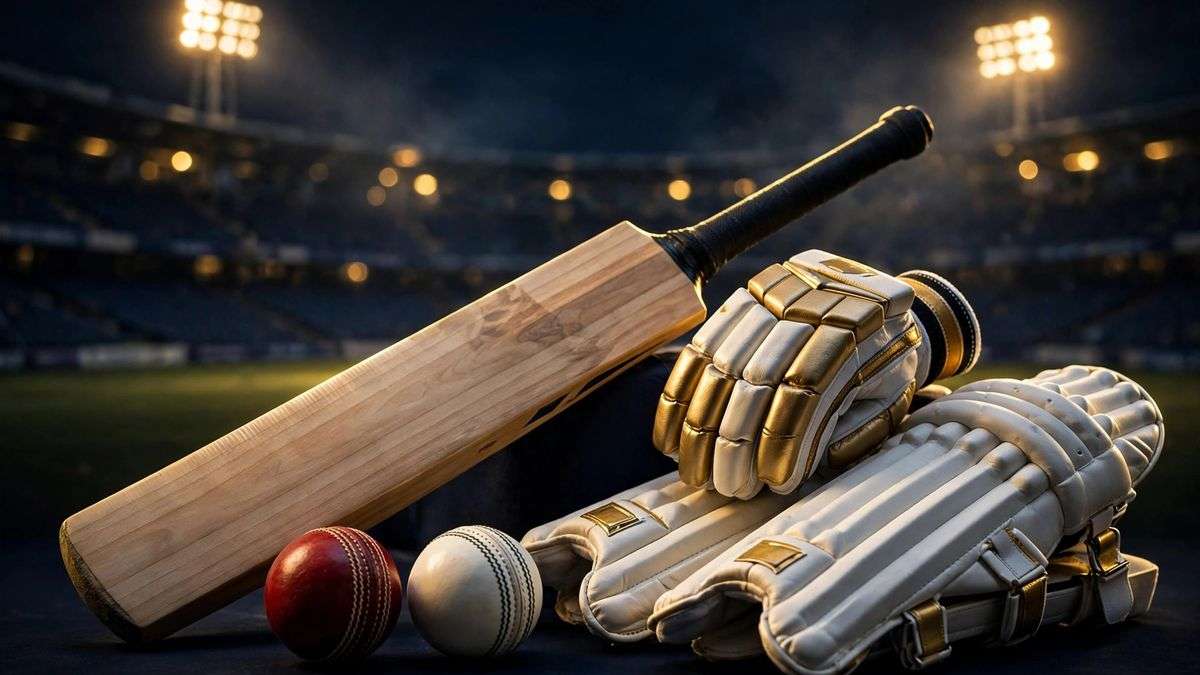
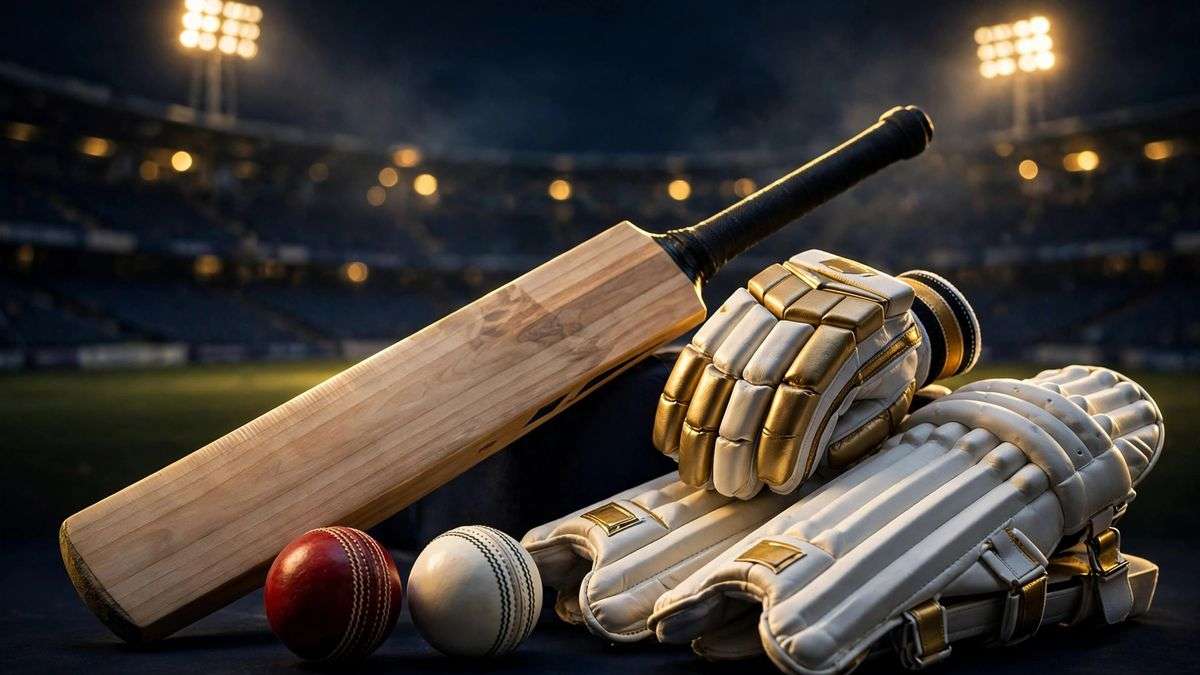
Women's cricket at this level is played with the same leather ball, on the same pitches, at rising pace. Fitting matters: gloves and pads sized for the player, not shrunk versions of men's stock, and a bat weight the batter can swing through a full innings.
- Batting gloves — Mooney's month: 238 runs and five catches behind the stumps.
- Cricket batting pads — light, close-fitting protection for quick running between wickets.
- English willow bats — balanced profiles for batters who score all round the ground.
- Cricket helmets — fit checked properly, every season.
Listen: The ICC Review podcast (ICC) discussed the tournament with Nasser Hussain — linked in this post's media list.
Sources & credits
- ICC — final report, Australia crowned champions: https://www.icc-cricket.com/tournaments/womens-t20-worldcup-2026/news/england-australia-final-womens-t20-world-cup-2026
- Mint Affairs — tournament results and winners list: https://www.mintaffairs.com/important-current-affairs/womens-t20-world-cup-2026
- ICC — Team of the Tournament: https://www.icc-cricket.com/tournaments/womens-t20-worldcup-2026/news/women-s-t20-world-cup-2026-team-of-the-tournament-unveiled
- Wikipedia — 2026 Women's T20 World Cup final: https://en.wikipedia.org/wiki/2026_Women%27s_T20_World_Cup_final
- Cricket Winner — most runs, most wickets and group points tables: https://www.cricketwinner.com/live/icc-womens-t20-world-cup-2026-most-runs-wickets-points-table/
- ICC — the road to the 2028 T20 World Cups: https://www.icc-cricket.com/news/the-road-to-2028-t20-world-cups-takes-shape
- Audio: The ICC Review podcast (ICC), via Omny — linked, not hosted.
Scores, awards and statistics are match facts from these sources; the writing is our own.
Moor Gears is an independent cricket equipment retailer based in Round Rock, Texas, and is not affiliated with or endorsed by the ICC or any team mentioned.