Test cricket does not give you a trophy for one good week. The ICC World Test Championship 2023 was the end of a two-year grind that started in August 2021, ran through Ashes series, subcontinent tours and rain-ruined draws, and finished with two teams standing: Australia on top of the table, India second, and a five-day final at The Oval in London from 7 to 11 June 2023.
If you only watched the final, you missed the real story. The cycle rewarded teams that could win away from home, survive with a draw when the pitch died, and keep a bowling attack fit for 20 matches. Australia did that best. India did it well enough to reach a second straight final. Everyone else had a stretch where the points slipped away.
How the table finished
Australia finished first with a points percentage of 66.67. India were second on 58.8. That gap looks comfortable. It was not. Australia lost only three of their 19 league matches before the final, won 11, and built their campaign on a deep pace rotation and an opening pair that kept giving them starts.
India's road was bumpier. They started the cycle in England, went home, went to South Africa and Bangladesh, then beat Australia at home in early 2023 to lock in their spot. No Indian batter passed 1,000 runs in the cycle. Virat Kohli was their top scorer with 932 runs. That tells you how spread out the work was, and how much their bowlers carried.
South Africa, Sri Lanka and England all had moments where a final place looked possible. England's late surge under a new, attacking approach produced runs at a rate Test cricket had rarely seen — their 657 against Pakistan was the highest team total of the cycle — but the early losses cost too much. Sri Lanka needed results to fall their way in the final weeks and they did not.
The players who owned the cycle
Cycle leaders — 2021-23 World Test Championship
- Most runs: Joe Root (England) — 1,915 runs, 8 hundreds
- Most wickets: Nathan Lyon (Australia) — 88 wickets, 5 five-wicket hauls
- Highest score: Tom Latham (New Zealand) — 252 vs Bangladesh
- Australia in the top 10 run-scorers: Usman Khawaja (1,621), Marnus Labuschagne (1,576), Steve Smith (1,407), Travis Head (1,389)
Joe Root finishing top of the run chart while England missed the final is the cycle in one line. Root made 1,915 runs at 53.19. He carried an England side in transition, then kept scoring after the style changed around him.
Usman Khawaja's numbers deserve a second look. 1,621 runs at 64.84, with six hundreds. For a player who spent years in and out of the Australian side, this cycle was a late-career peak, built on patience against the new ball in Pakistan, Sri Lanka and at home.
With the ball, Nathan Lyon was not close to being caught. 88 wickets, 21 ahead of Kagiso Rabada on 67. R Ashwin took 61. Lyon took wickets in every country Australia visited, and his best of 8/64 showed he could still run through a side on a turning pitch, not just hold an end while the quicks rested.
Babar Azam averaged 61.08 across 14 matches, the only batter besides Khawaja to average over 60 among players with 1,000 runs. Pakistan finished seventh, which shows the other side of this format: one great batter does not get you to a final. You need 20 wickets, again and again, in conditions that do not suit you.
The cycle leaderboards
Here is the full picture, final included. Four Australians in the two top fives tells its own story — but note who sits on top of the run chart in a losing cause.
Top 5 run-scorers — 2021-23 WTC cycle
| Player | Team | Runs | Average |
|---|---|---|---|
| Joe Root | England | 1,915 | 53.19 |
| Usman Khawaja | Australia | 1,621 | 64.84 |
| Marnus Labuschagne | Australia | 1,576 | 52.53 |
| Babar Azam | Pakistan | 1,527 | 61.08 |
| Steve Smith | Australia | 1,407 | 52.11 |

Top 5 run-scorers — WTC 2021-23 cycle — Chart: Moor Gears
Top 5 wicket-takers — 2021-23 WTC cycle
| Player | Team | Wickets | Average |
|---|---|---|---|
| Nathan Lyon | Australia | 88 | 26.12 |
| Kagiso Rabada | South Africa | 67 | 21.05 |
| Ravichandran Ashwin | India | 61 | 19.67 |
| James Anderson | England | 58 | 20.37 |
| Pat Cummins | Australia | 57 | 22.15 |

Top 5 wicket-takers — WTC 2021-23 cycle — Chart: Moor Gears
Why Australia topped it
Three reasons, all boring, all true.
First, depth with the ball. Pat Cummins took 57 wickets, Lyon 88, and Australia could rotate Mitchell Starc, Josh Hazlewood and Scott Boland without the attack dropping off. In a two-year cycle, injuries decide tables. Australia absorbed them.
Second, runs at the top. Khawaja, Labuschagne and Smith all passed 1,400 runs. When your top three score that heavily, your middle order bats with the game already shaped. Travis Head then batted at a strike rate that broke games open in a session.
Third, they won the series that mattered most for the table and avoided the bad loss. Every other contender dropped a series they were expected to win. Australia largely did not.
India's second final, and the question it raised
India reached the first WTC final in 2021 and lost to New Zealand in Southampton. Reaching the second one, in a cycle where they changed captains and lost key players to injury at different points, was a real achievement. Ravindra Jadeja was the only player in the whole cycle with more than 500 runs and more than 40 wickets. Rishabh Pant, before his car accident in December 2022, was the leading run-scorer among wicketkeepers with 868 runs.
But the same question followed them to The Oval: could a side built to win at home on turning pitches win a one-off final in England in June, against an attack that had just played county conditions and had a full-strength pace group? The final answered it. Our separate final post walks through those five days ball by ball in spirit — Head and Smith on day one, Rahane's fightback, and Boland on the last morning.
What went right
Plenty, starting with the format itself. Give every Test a league attached to it and dead rubbers mostly disappear: 57 of the 69 league matches produced a result, with only 12 draws. Fans in March were doing points-percentage maths on their phones. That never used to happen in Test cricket.
England's reboot worked, too — just too late for this table. The 657 in 101 overs against Pakistan at Rawalpindi, at 6.50 runs an over, was a team treating a Test first innings like a dare. It did not win them a final place, but it changed how everyone else had to plan against them.
And the final got the finish the cycle deserved from its best side story: Travis Head walked in at 76 for 3 on day one and made 163, sharing a 285-run stand with Steve Smith that took the game away from India before lunch on day two was even a memory.
What went wrong
Start with the strangest selection call of the cycle. R Ashwin took 61 wickets at 19.67, arrived at The Oval as the world's No. 1-ranked Test bowler, and India left him out of the final XI. Australia had five left-handers in their top eight for his off-spin to work on. India lost by 209 runs. Fans are still arguing about that one, and honestly, they should be.
Elsewhere, the holders faded quietly. New Zealand, champions in 2021, finished sixth with four wins from 13 matches and a points percentage of 38.46. Pakistan were seventh on 38.10 despite Babar Azam's 1,527 runs at 61.08 — including a 3-0 home whitewash by England, the series where their pitches were so flat the bowlers deserved danger money. England's own charge also carried a self-inflicted cost: 12 penalty points deducted across the cycle, the kind of slow-over-rate tax that quietly kills a finals push.
Emerging names
Harry Brook (England) announced himself in Pakistan in December 2022: 468 runs in the three-Test series, with a hundred in every match — 153 at Rawalpindi, 108 at Multan, 111 at Karachi — despite having played only one Test before the tour. England won 3-0, and Brook looked like he was batting in a different, faster sport.
Prabath Jayasuriya (Sri Lanka) had the debut every spinner dreams about: 12 wickets for 177 against Australia at Galle in July 2022, six in each innings. He finished Sri Lanka's cycle with 33 wickets in just five Tests, including four five-wicket hauls.
Scott Boland (Australia) might be the best story here. His entire Test career fitted inside this cycle, and he took 33 wickets at 14.57 — the lowest average of any bowler with 10 or more wickets in the cycle. On the final morning at The Oval he removed Virat Kohli and Ravindra Jadeja in the same over. Party over.
Daryl Mitchell (New Zealand) scored 538 runs at 107.60 in the 2022 series in England, with hundreds in all three Tests. New Zealand lost that series 3-0, which makes Mitchell the most cheerful footnote to a whitewash you will ever find.
What to watch next
The 2023-25 cycle wasted no time: it opened with the Ashes in England, starting 16 June 2023, barely a week after The Oval final. Nine teams again, six series each — three home, three away — and the final is set for Lord's in June 2025.
The questions write themselves. Can Australia defend the mace with an ageing, brilliant attack, or does the transition bite mid-cycle? Can India reach a third straight final — and this time pick their best spinner and actually lift the thing? South Africa finished third here on 55.56, close enough to smell it; can they take the last step? And does England's all-out attacking style survive a full cycle of away tours, or was Rawalpindi the peak of the experiment?
Two years, nine teams, one mace. Clear your June 2025.
What Test cricket asks of your kit
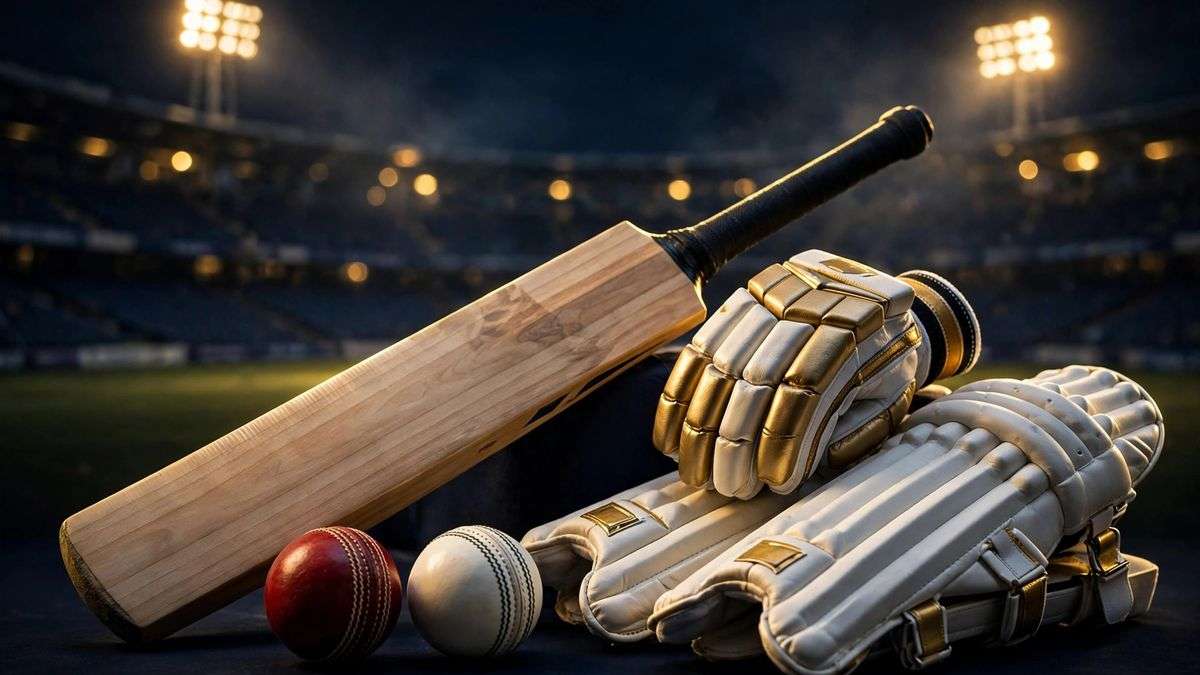
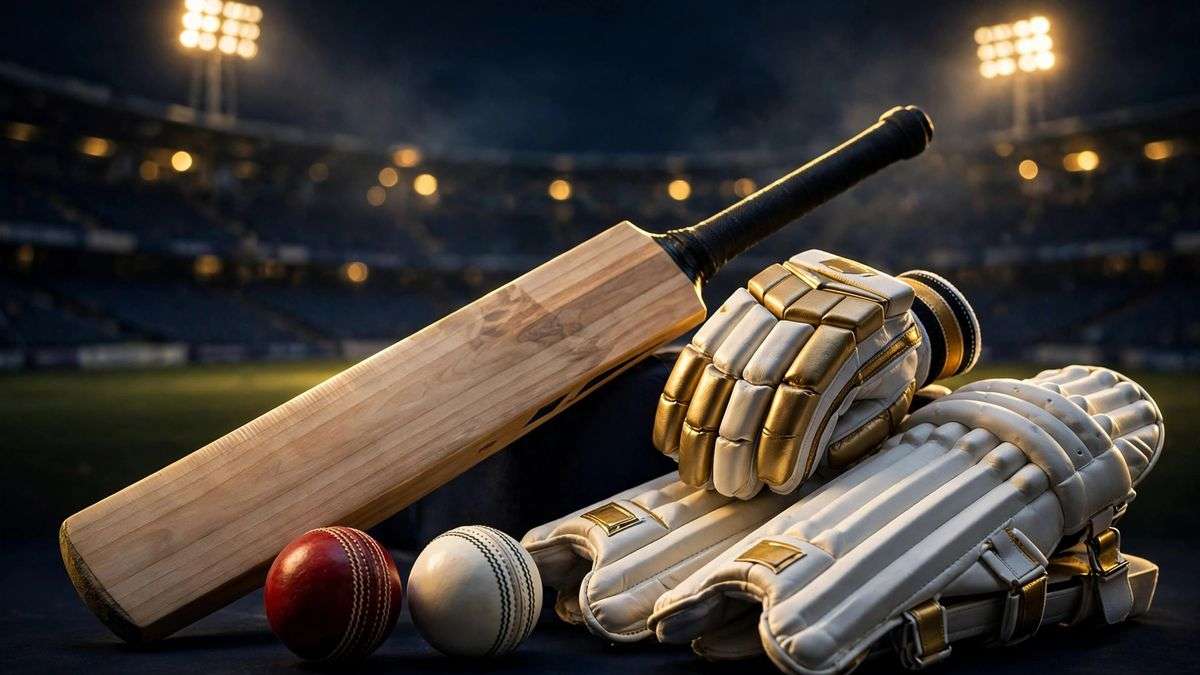
A two-year Test cycle is a gear stress test. Batters face a hard new leather ball in the first session and a soft, scuffed one 80 overs later. A bat that lasts a home summer of club cricket can crack in a month of net sessions against proper pace. That is why Test players carry multiple bats, knock them in properly, and protect the toe.
For club players copying what they see: the basics travel down. A well-knocked-in English willow bat, batting gloves with real finger protection for pace, and pads that you can run in for three hours matter more than any sticker on the blade. Wicketkeepers in a long cycle take hundreds of balls a match standing up and back — keeping gloves and inner gloves are not optional extras at that workload.
The coach's eye
Australia's title was a systems win, and the system had two parts. The first was pace depth: when one quick broke down, another of near enough the same quality walked in, so the pressure never lifted for a whole series. The second was Khawaja. On the slow pitches of Pakistan and Sri Lanka, his method — leave well, score square, bat time — gave that attack a scoreboard to defend. His 1,621 runs at 64.84 were not decoration. They were the platform.
England supplied the cycle's neatest lesson in what not to do. Twelve points deducted for slow over rates is not bad luck. It is a side deciding, session after session, that tempo is somebody else's problem. In a table settled by percentages, those were wickets England gave away without a ball being bowled.
And Lyon made the whole thing flexible. The cycle's leading wicket-taker, with 88, could run through a side on a turner — his best was 8 for 64 — and still hold an end dry on a flat one. Australia never had to choose between attack and control. They had both in the same bowler.
What most people missed
The cycle's top run-scorer never got near the final. Joe Root made 1,915 runs at 53.19, with eight hundreds, for an England side that finished well short of The Oval. The table rewards teams. The run chart kept its own counsel.
India reached the final with no batter passing 1,000 runs — Kohli topped their list with 932. What carried them was the ball: Ashwin's 61 wickets at 19.67, and a pace group that kept winning the sessions that decide Tests, home and away.
Then there is the evergreen. James Anderson took 58 wickets at 20.37, giving up 2.27 runs an over, in a cycle in which he turned 40. In the 2022 home summer he took 11 wickets at 18.63 against New Zealand and 10 at 16.6 against South Africa, then went to Pakistan and took eight more on the flattest pitches in the game. The most quietly remarkable number of the whole cycle might be a fast bowler's birth year.
The bit that stays with you
A two-year tournament asks something of the people who follow it. There is no final to circle in the calendar at the start, no single month where it all happens. There are winters and summers, series that blur, a table that moves while you are looking the other way. Somewhere out there, supporters kept spreadsheets. They worked out percentages in March. They argued about penalty points in pubs and group chats.
If you play club cricket, you know this rhythm in your bones. Your own season is a long story too: the opening bowler who retires in May, the teenager who turns up in August and suddenly belongs, the away game in the rain that somehow decides everything. The championship's real gift was that it treated Test cricket the way club players already live the game — as something you carry with you, week after week, until one June week it all comes down to five days.
Gear corner
Test-match demands, club-level kit:
- Long innings start with the right blade: English Willow Bats for pace and bounce, or Kashmir Willow Cricket Bats if you want durability for heavy net use.
- Facing a new leather ball, finger protection counts: Batting Gloves and Cricket Batting Pads.
- Keep your bat alive through a long season: Bat Care and a fresh Grip.
Sources & credits
- Cricket Times — top performers of the WTC 2021-23 cycle: https://crickettimes.com/2023/06/from-leading-run-scorer-to-highest-wicket-taker-top-performers-of-the-world-test-championship-2021-23-cycle/
- Wisden — WTC 2021-2023 XI and cycle statistics: https://www.wisden.com/cricket-news/wisdens-world-test-championship-xi-2021-2023
- Cricbuzz — WTC Final 2023 score summary: https://www.cricbuzz.com/live-cricket-scores/65805/aus-vs-ind-final-icc-world-test-championship-final-2023
- ICC (official site) — full match highlights video page, WTC23 Final: https://www.icc-cricket.com/videos/australia-wins-first-world-test-championship-mace-full-match-highlights-wtc23-final
- Wikipedia — 2021–23 ICC World Test Championship (most runs: Root 1,915; most wickets: Lyon 88): https://en.wikipedia.org/wiki/2021–23_ICC_World_Test_Championship
- Cricket.com.au — "Two years of dominance something to savour: Cummins" (cycle leaderboards; Boland 33 wickets at 14.57; Ashwin's omission from the final XI): https://www.cricket.com.au/news/3607669/two-years-of-dominance-something-to-savour-cummins?tags=9037
- Sportzpoint — top wicket-takers of the WTC 2021-23 (Rabada 67 at 21.05, Anderson 58 at 20.37): https://sportzpoint.com/cricket/top-wicket-takers-in-the-world-test-championship-2021-23
- ESPNcricinfo / Cricinfo — WTC 2021-2023 final points table: https://www.cricinfo.com/series/icc-world-test-championship-2021-2023-1268315/points-table-standings
- ICC via Latestly/PTI — Harry Brook, ICC Player of the Month, December 2022 (468 runs, three hundreds in Pakistan): https://www.latestly.com/agency-news/sports-news-brook-gardner-named-icc-players-of-the-month-4694402.html
- ThePapare — Sri Lanka's 2021-23 WTC wrap (Jayasuriya: 33 wickets in five Tests, 12/177 on debut): https://www.thepapare.com/icc-world-test-championship-2021-23-sri-lanka-wrap/
- ICC (official site) — World Test Championship, the story so far (2023-25 format and the Lord's final): https://www.icc-cricket.com/media-releases/icc-world-test-championship-the-story-so-far
- Cricexec / ICC cycle review — 57 of 69 league Tests produced a result, 12 draws; England's 657 at 6.50 runs per over: https://www.cricexec.com/the-icc-world-test-championship-2021-23-two-years-of-riveting-test-action/48959/
- Wikipedia — Daryl Mitchell (538 runs at 107.60, hundreds in all three Tests of the 2022 England series): https://en.wikipedia.org/wiki/Daryl_Mitchell_(New_Zealand_cricketer)
- ICC — top wicket-takers in the World Test Championship (Anderson's 58 wickets at 20.37 and 2.27 runs per over; his 2022 home-summer and Pakistan returns): https://www.icc-cricket.com/news/top-wicket-takers-in-the-current-world-test-championship
- Video: none verified for YouTube embed in this post. Audio: none verified.
Moor Gears is an independent cricket equipment retailer based in Round Rock, Texas, and is not affiliated with or endorsed by the ICC or any team mentioned.